Trying to decide between Highland Park and University Park? Even though both are part of the Park Cities and share a close-in location north of downtown Dallas, they do not live exactly the same day to day. If you are weighing the two, it helps to look past reputation and focus on how housing, retail patterns, lot character, and neighborhood activity actually differ. Let’s dive in.
Highland Park vs. University Park at a Glance
Highland Park and University Park are both highly residential towns in the Park Cities, and both are served by Highland Park ISD. Still, their scale is noticeably different. Highland Park has about 8,700 residents in less than three square miles, while University Park has more than 25,000 residents and more than 7,000 homes.
That difference in size shapes how each place feels. Highland Park is smaller and more concentrated, while University Park covers more ground and tends to offer more variety from one area to the next.
Highland Park Feels More Concentrated
Highland Park describes itself as a built-out town that continues to see redevelopment. Its land use is tightly managed, and the vast majority of the town is developed with single-family homes, with the rest made up of multifamily properties, retail and service uses, schools, a church, parks, town buildings, and Dallas Country Club.
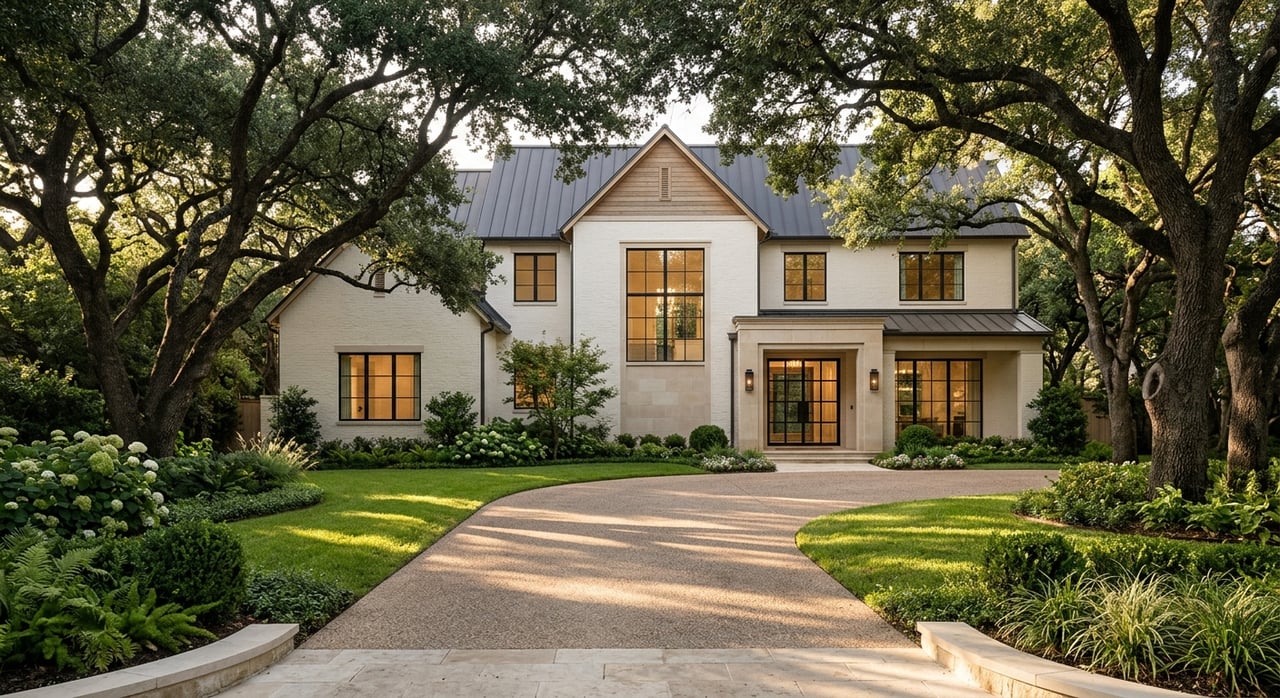
In practical terms, that often creates a more uniform residential rhythm. Many buyers experience Highland Park as polished, established, and estate-oriented, especially because the town is compact and its residential areas read as part of a tightly composed whole.
Highland Park Lot Character
Highland Park’s zoning ordinance includes several one-family residence districts, along with two-family, multifamily, retail, planned development, and other districts. One detail that stands out is the A district, which is intended for large lots with a minimum lot size of five acres.
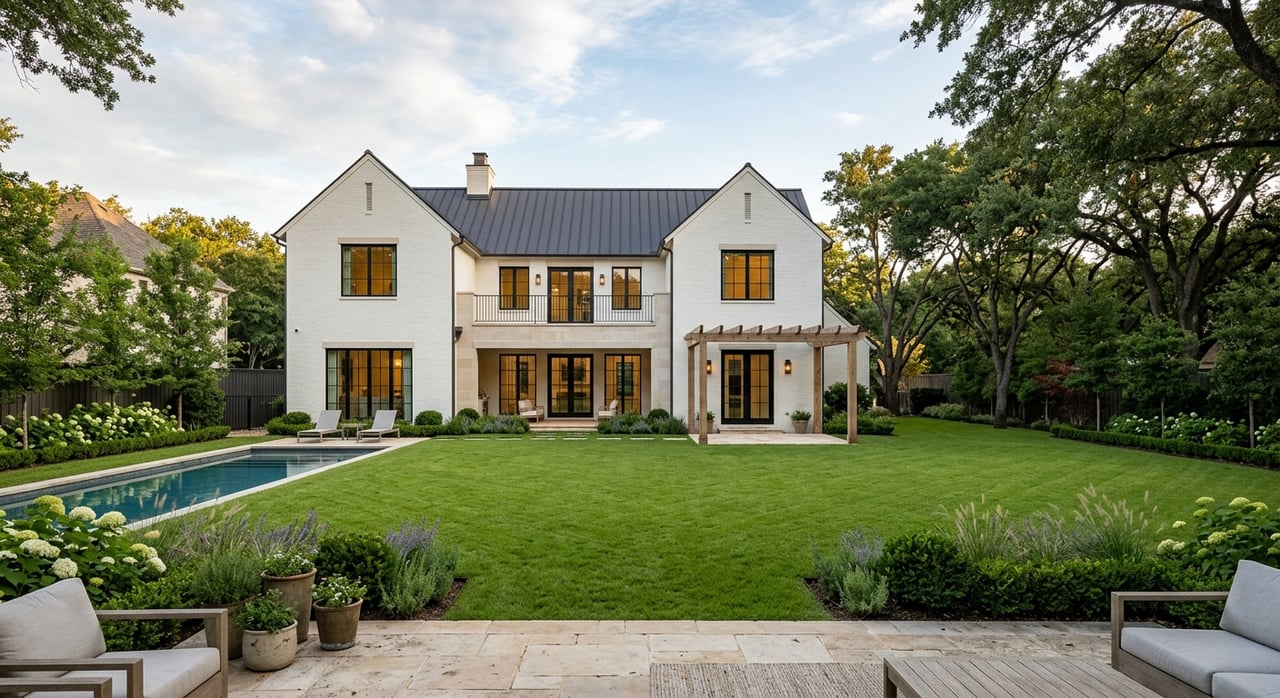
That said, only six properties in Highland Park are zoned in that A district, all on the east side of Preston Road between Armstrong Avenue and Beverly Drive. So while Highland Park often gives an estate-like impression, true very-large-lot zoning is rare within the town.
University Park Feels More Varied
University Park highlights redevelopment procedures, zoning controls, and a secure residential atmosphere. The city has 6,927 residential parcels, and 79% of them are single-family homes. It also has more than 7,000 homes overall.
Unlike Highland Park, University Park clearly accommodates a wider mix of housing forms. Its zoning and platting rules allow for single-family, single-family attached, duplex, and multifamily development, which can make the city feel more varied from block to block.
University Park Lot and Housing Mix
University Park’s lot-coverage rules shift by lot size in the SF-1 through SF-4 districts. Allowable impermeable surface ranges from 3,600 square feet on the smallest lots to 35% on lots of 35,001 square feet or more.
The city also treats SF-A, D-1, D-2, MF-1, MF-2, and MF-3 differently from standard single-family districts. For you as a buyer, that means the housing story can change more noticeably depending on the block, the zoning district, and the surrounding redevelopment pattern.
Shopping and Dining Patterns Are Different
One of the clearest differences between Highland Park and University Park is how commercial activity is laid out. Both offer convenience, but they do it in different ways.
If your daily routine includes walking to coffee, picking up dinner nearby, or living near active retail streets, this part matters a lot.
Highland Park Retail Is More Centralized
Highland Park’s retail identity is centered on Highland Park Village. The original concept set aside ten acres across Preston Road for an automobile- and pedestrian-accessible shopping center that could function as a town square.
Today, Highland Park Village is known as a luxury open-air shopping and dining destination. For many buyers, that creates a more centralized and destination-oriented feel, where one iconic commercial node anchors the town’s retail identity.
University Park Retail Is More Distributed
University Park has a more spread-out everyday convenience pattern. The city identifies Snider Plaza as the heart of University Park and its original commercial district, established in 1927.
It also points to Preston Center, shops and eateries along Preston Road near Lovers Lane, businesses on Lovers Lane near the Tollway, and activity near SMU on Mockingbird. Because there is more than one active commercial area, University Park can feel more street-active near those edges while still maintaining quieter interior residential blocks.
Parks, Trees, and Public Realm
Both communities place strong value on public spaces and neighborhood upkeep, but they emphasize slightly different features.
These distinctions may matter if you are paying close attention to landscaping, recreation access, or the overall look and feel of daily life outside the home.
Highland Park Public Spaces
Highland Park places strong emphasis on mature trees, parks, and public service. The town says trees are an important part of the community, and its parks department maintains 22 park locations and 12 landscaped traffic islands totaling 59.3 acres.
The town also highlights places like Lakeside Park and offers services such as resident-only parking programs and house-watch service. For buyers, that can reinforce a sense of a highly managed, landscaped, and service-oriented environment.
University Park Public Spaces
University Park emphasizes attractive homes, beautiful parks, churches, SMU, and a secure residential atmosphere. The city has a Parks, Recreation, Trails, Open Space and Recreation Master Plan adopted in February 2024.
It also promotes neighborhood parks, tennis and pickleball courts, and an Olympic-size pool. That can make University Park feel a bit more recreation-forward in day-to-day living, depending on where in the city you are looking.
What the Day-to-Day Feel May Be Like
A helpful shorthand is this: Highland Park often reads as more concentrated, formal, and estate-like. University Park often reads as more varied, with more activity around retail and campus-adjacent areas.
That does not mean one is better than the other. It means the better fit depends on what you want your daily routine, block feel, and convenience pattern to look like.
Questions to Ask When Touring Homes
When you tour homes in either area, it helps to look beyond the house itself. The surrounding block, nearby commercial activity, and local zoning context can influence your experience just as much as square footage or finishes.
Here are a few smart questions to ask as you narrow your search:
- How close is the property to Highland Park Village, Snider Plaza, Preston Center, or SMU?
- Is the home near a block with resident-only parking rules or heavier parking pressure?
- What zoning district is the property in?
- How much redevelopment is allowed nearby?
- Is the property’s appeal more about privacy and lot feel, or walkability and convenience?
- How much of the block’s character comes from tree canopy, traffic patterns, or nearby commercial uses?
- Would you prefer Highland Park’s centralized retail pattern or University Park’s more distributed neighborhood-retail pattern?
Which One May Fit You Better?
If you are drawn to a smaller, more concentrated town with a highly centralized retail anchor and a polished residential feel, Highland Park may align with what you want. If you prefer more block-by-block variation, multiple retail nodes, and a mix of quiet residential streets with more active edges, University Park may be a better match.
The key is to compare not just the address, but the lifestyle pattern behind it. In markets as nuanced as the Park Cities, small differences in lot character, zoning, and daily convenience can have a big impact on long-term satisfaction.
If you want help comparing specific blocks, lot profiles, or redevelopment patterns in Highland Park and University Park, Holly Davis & Amy Farris bring a local, design-aware approach to helping you evaluate what fits best.
FAQs
How do Highland Park and University Park differ in size?
- Highland Park is smaller, with about 8,700 residents in less than three square miles, while University Park has more than 25,000 residents and more than 7,000 homes.
How do Highland Park and University Park differ in housing types?
- Highland Park is dominated by single-family homes and tends to feel more uniform, while University Park includes single-family, single-family attached, duplex, and multifamily forms, which can create more variation.
How do Highland Park and University Park differ in shopping and dining?
- Highland Park’s retail identity is centered on Highland Park Village, while University Park has multiple commercial nodes, including Snider Plaza, Preston Center, areas near Lovers Lane, and businesses near SMU.
How do Highland Park and University Park differ in lot feel?
- Highland Park often feels more estate-oriented and concentrated, while University Park can feel more block-by-block in character because of its wider range of lot sizes, zoning districts, and housing forms.
How do Highland Park and University Park differ in neighborhood activity?
- Highland Park often feels more centralized and formal, while University Park can feel more active near retail and campus edges with quieter residential blocks in the interior.
What should you ask when touring homes in Highland Park or University Park?
- You should ask about proximity to retail areas, zoning district, parking rules, redevelopment potential nearby, lot character, traffic patterns, and whether the block fits your preferred balance of privacy and convenience.