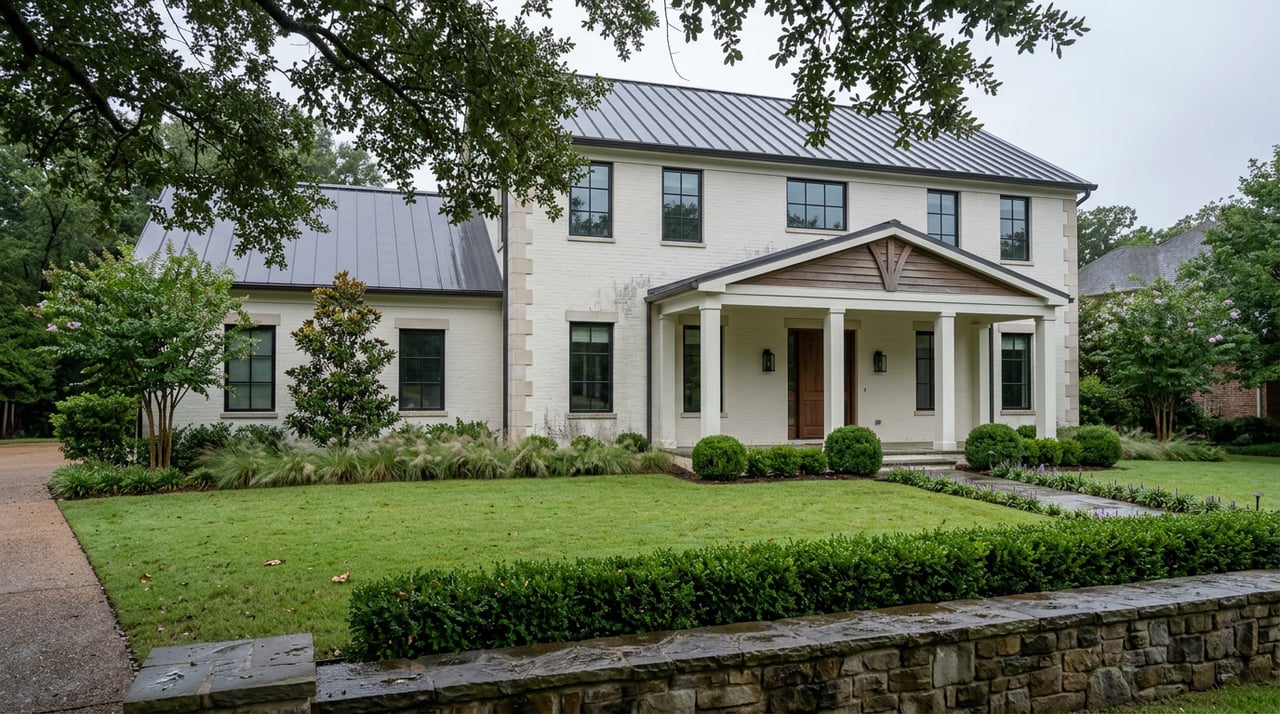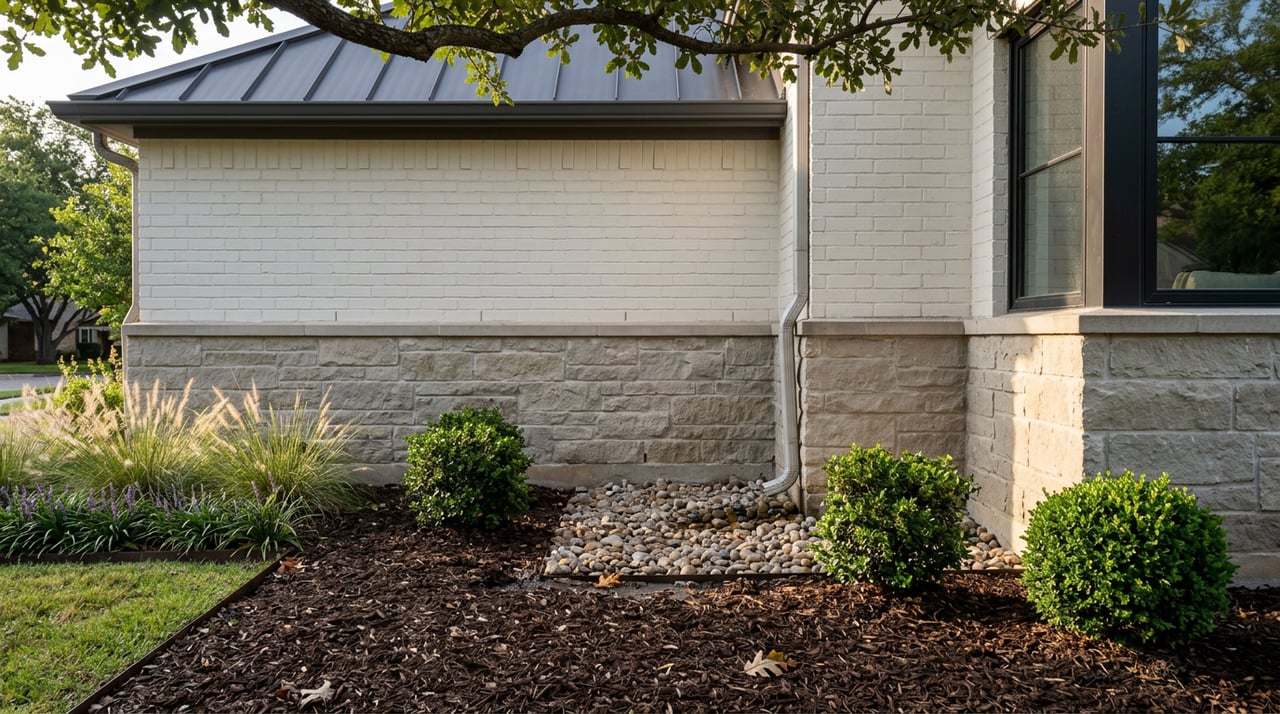
A Southlake seller found $9,500 in foundation work during a pre-listing inspection. Instead of waiting to see if a buyer's inspector would catch it, the seller had the repairs done, kept every invoice and warranty document, and put the house on the market with the paperwork already in hand. It sold for $18,000 more than comparable listings still carrying foundation question marks, closed in 22 days instead of the typical 45, and moved through negotiation without a single repair fight.
That story gets told in foundation-repair marketing because it makes for a tidy before-and-after. But the more useful version of the story is the one buried in the contrast: most Southlake transactions don't work that way. Most sellers don't get ahead of it, most buyers discover the issue mid-option-period, and the decision about what to do next has to happen inside a window that is measured in days, not weeks. The soil under Southlake is well understood. What trips people up is the timeline they have to work inside once that soil shows up on a report.
The Same Clay Under a 1998 Resale and a 2026 New Build
Southlake sits on Blackland Prairie clay, the kind of expansive soil that shrinks several inches during a hot, dry North Texas summer and swells back when fall rain returns. That cycle repeats every year, and it does not check the year a house was built. Homeowners often assume new construction sidesteps the problem because modern post-tension slabs are engineered for soil movement. They are, up to a point. During severe drought years the clay under Southlake can move beyond what those slabs were designed to tolerate, and the larger footprints common in custom-built homes create more surface area across which that movement can happen unevenly.
That matters because a meaningful share of Southlake's housing stock was built in the 1990s and 2000s, putting a large slice of resale inventory at 20 to 30 years old right now. Neighborhoods like Timarron, Carillon, Clariden Ranch, Monticello Estates, Southlake Woods, Stone Lakes, Coventry Manor, and Shady Oaks all sit on this same geology, and so does newer construction closer to Southlake Town Square. The point isn't that any one neighborhood is riskier than another. It's that age of construction changes what kind of foundation issue you're likely to find, not whether you'll be having the conversation at all.
What Your Inspector's Report Actually Tells You
Here is the distinction that gets lost in most option-period conversations. A Texas Real Estate Commission licensed home inspector performs a visual, non-invasive review. That inspector can note a stair-step crack in the brick, a door that sticks, a floor that feels slightly out of level, and will typically recommend further evaluation. What that inspector cannot do, by the scope of a standard inspection, is diagnose the cause of the movement, determine how serious it is, or certify whether the structure is sound.
That next step belongs to a licensed structural engineer, someone who carries a P.E. license through the Texas Board of Professional Engineers and can produce a sealed report using tools like elevation surveys and soil moisture analysis. Tommy LaLonde, the principal engineer at Thomas Engineering Consultants, is one of the local engineers who does this work full time and won't also sell you the repair, precisely so the finding isn't shaped by an incentive to recommend a fix. That separation matters more here than in most markets, because Texas does not require foundation repair companies to be licensed at all. A repair estimate and an engineering diagnosis are not interchangeable documents, and treating the first as if it were the second is how buyers end up either overpaying for unnecessary work or underestimating something real.
The Money Question Insurance Won't Answer
Standard Texas homeowners insurance policies exclude foundation damage caused by ordinary soil movement. It falls under an "earth movement" exclusion that most policies carry, and shrink-swell clay cycling through a normal Texas summer and fall counts as ordinary. The narrow exception is a sudden, accidental event, a burst pipe under the slab, for instance, where the resulting structural damage might be covered even though the plumbing repair itself typically isn't. That distinction is worth confirming in writing with your insurer before you assume anything is covered, because in Southlake specifically, where custom homes routinely exceed $1 million and often run well past $1.5 million, the dollar difference between "the insurance handles it" and "you handle it" is not small.
What a Seller Actually Has to Say
Texas Property Code Section 5.008 requires sellers of a previously occupied single-family home to complete a written Seller's Disclosure Notice before closing. The standard TREC form asks directly whether the seller is aware of previous structural or foundation repair. If a Southlake seller has had foundation work done, the disclosure obligation extends past a yes-or-no checkbox to cover the repair itself, which company performed it, and whether a transferable warranty exists. A seller who marks "no" while sitting on a five-year-old repair invoice is not protected by having forgotten. Buyers reading a disclosure form should treat any "yes" answer as an invitation to ask for the paperwork, and treat a blank or "unknown" answer as a reason to ask a direct question before the option period closes rather than after.
The Ten Days You Actually Get
This is where the timeline compresses everything above into a decision. Texas contracts typically negotiate a 7 to 10 day option period, and it is not automatic. It is a negotiated contract term, and the clock starts on the date both parties sign, not the day the offer was submitted. A general home inspection usually happens in the first two or three days. If that report flags a foundation concern, and in a large share of Southlake transactions it will, the buyer then needs to schedule a specialty foundation inspection on top of the general one, typically running $300 to $750, and get that engineer's report back with enough time left to actually negotiate before the option period expires.
That negotiation tends to follow a rough pattern. For smaller, well-documented issues in the $3,000 to $6,000 range, buyers commonly ask for a price reduction covering roughly half to three-quarters of the estimated repair cost. For moderate issues in the $7,000 to $15,000 range, that ask often moves closer to the full estimated cost, since a serious buyer is going to factor the full expense into their decision regardless of who technically performs the repair. None of this works if the specialty engineer never gets scheduled until day eight of a ten-day window. Structural engineers in a market like Southlake are not sitting idle, and a buyer who waits to see how bad the crack "looks" before booking the extra inspection is often the buyer who runs out of clock.
There is a broader market shift worth naming here too. As of early 2026, Southlake's overall median sale price sits in the $1.3 million to $1.4 million range, with roughly 22 percent of purchases closing all-cash, nearly double the wider Dallas-Fort Worth average, and that share climbs to about 35 percent above $2 million. Cash buyers, and buyers competing against them, spent much of 2021 and 2022 waiving inspection contingencies entirely just to win a bid. That pressure has eased. Inspection periods are standard again, and buyers who use the full option period rather than rushing through it are negotiating from a position that simply didn't exist three or four years ago.
The Smarter Sequence
The seller who paid $9,500 before listing wasn't lucky. They removed the uncertainty from the buyer's side of the table before a buyer's inspector ever set foot on the property, and they got paid for that certainty. For a seller weighing whether to order a foundation inspection before listing, the math from that one case is instructive even if it isn't universal. For a buyer, the lesson runs the other direction. The report you get in the first three days of your option period isn't the end of your due diligence. It's the signal to book the second inspection immediately, because in Southlake the clock, not the crack, is usually the thing working against you.
A Few Questions Worth Answering Directly
Does a brand new Southlake home still need this conversation? Yes. Post-tension slabs handle moderate soil movement well, but Southlake's clay can exceed that tolerance in a severe drought year, and larger custom footprints give movement more room to happen unevenly. New construction changes the likely severity of an issue, not whether the topic comes up.
If the seller's disclosure says no repairs but the inspector finds cracks, what does that mean? It means you ask before you assume. A "no" on the disclosure reflects what the seller says they know as of the day they signed it. It is not a guarantee, and a discrepancy between the disclosure and your inspector's findings is exactly the kind of thing worth raising directly with the listing agent before your option period runs out.
Is a foundation crack automatically a deal breaker? No. Hairline cracks under an eighth of an inch that haven't changed over time, or a single small crack with no other symptoms, are typically treated as minor and negotiable rather than disqualifying. The engineer's report is what tells you which category you're actually in.
If you are weighing a purchase or a listing in Southlake and want a clear read on how a specific property's foundation history should shape your offer or your asking price, Holly Davis and Amy Farris can walk through it with you before you're staring down a shrinking option period.